
REPLACING TUBES IN CACW COOLERS
Fluid Dynamics is the Australian representative of both Sterling Thermal Technology and Kelvion. Contact Fluid Dynamics for all your heat exchanger needs.
A practical guide to assessment, retubing and recommissioning.
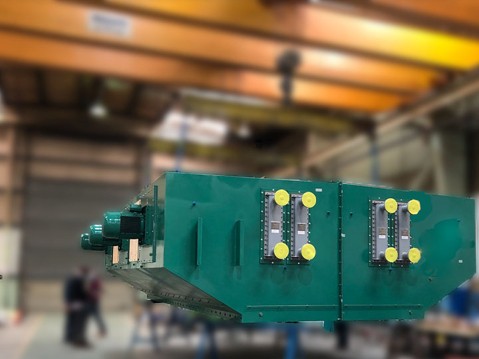
CACW coolers are critical to the reliable operation of large motors and generators. When tubes leak or deteriorate, the cooler may be repaired by plugging, lining or replacing tubes—but only after its construction and condition have been properly assessed.
What is a CACW cooler?
CACW means Closed Air Circuit, Water Cooled. The arrangement is also known as TEWAC—Totally Enclosed Water-to-Air Cooled. Air circulates through the motor or generator and then passes across a finned heat-transfer surface. Cooler water flowing inside the tubes removes heat from the recirculating air before it returns to the electrical machine.
Because the air circuit is enclosed, the windings and internal components are protected from dust, moisture and other external contaminants. The water circuit, however, remains exposed to the effects of water chemistry, corrosion, erosion, fouling and flow conditions. Tube condition therefore has a direct bearing on both cooling performance and equipment reliability.
Why CACW tubes fail
The most common deterioration mechanisms include:
Internal corrosion or pitting caused by unsuitable water chemistry, dissolved oxygen, chlorides or biological activity.
Erosion and inlet-end attack caused by excessive water velocity, entrained solids or poor flow distribution.
Fouling, scale or biological deposits that restrict water flow and reduce heat transfer.
Vibration or fatigue where tubes are inadequately supported or the air and water flows differ from the original design.
Failure of the tube-to-tube-sheet joint through under-expansion, over-expansion, corrosion or thermal cycling.
External corrosion or fin deterioration that weakens the tube or reduces the effectiveness of the air-side surface.
A leak is not automatically a retube.
One isolated defect may be suitable for plugging or a targeted repair. Repeated failures, widespread wall loss or deteriorated fins generally point to a full retube or replacement core. The decision must also account for the cooler’s required thermal capacity and redundancy.
Inspection comes first
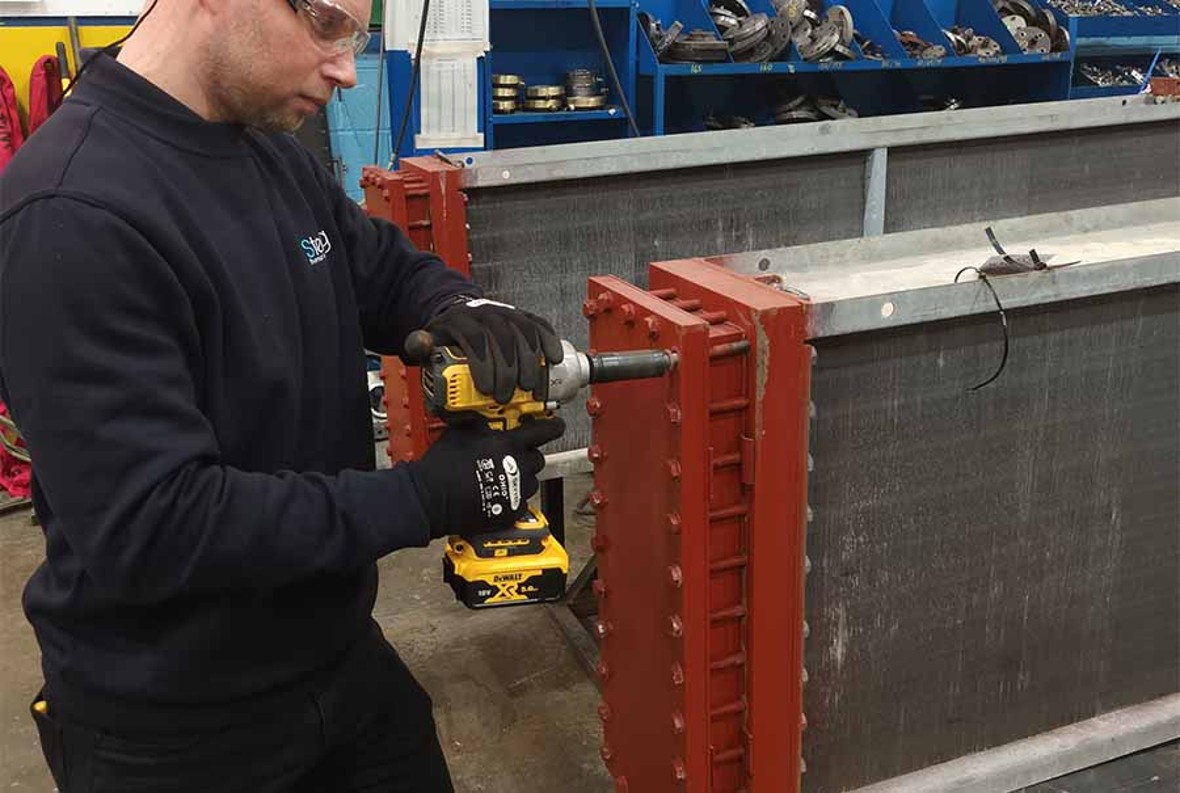
A sound repair starts with a test, inspection and report. The cooler should be isolated, drained and removed from the machine where practical. After cleaning, the technician records the nameplate information and original duty, examines the casing and fin block, removes the headers and inspects the tube ends, tube sheets, internal coatings and gasket faces.
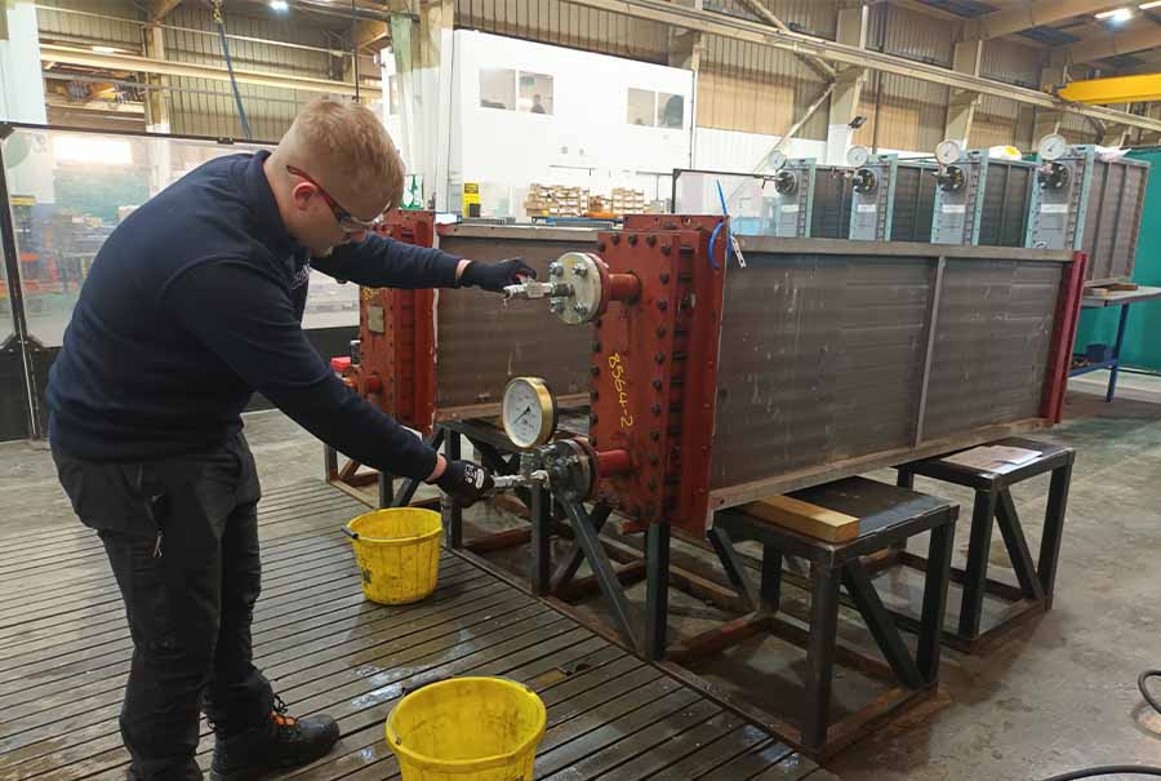
Pressure testing identifies active leaks. Depending on tube material and accessibility, eddy-current, ultrasonic or other non-destructive testing may be used to determine the extent and distribution of wall loss. The inspection should also confirm the tube material, diameter and wall thickness; tube-sheet material; fin construction; tube-end joint; design pressure; and whether the cooler uses single- or double-wall tubes.
Selecting the right repair.
|
Option |
Generally suitable when |
Important consideration |
|
Plugging |
Only a small number of tubes have isolated defects. |
Confirm that the resulting loss of heat-transfer area and change in water distribution are acceptable. |
|
Tube liner |
Damage is localised and the tube geometry permits a properly engineered liner. |
A liner reduces the water passage and adds thermal resistance; suitability must be checked for the particular CACW design. |
|
Partial or full retube |
Tubes have failed but the tube sheets, fins, headers and casing remain serviceable. |
The original tube-to-fin and tube-to-tube-sheet performance must be reproducible. |
|
Replacement core |
Failures are widespread, fins or tube sheets are badly deteriorated, or retubing is impractical. |
A new core may retain the original footprint while upgrading materials, performance or leak protection. |
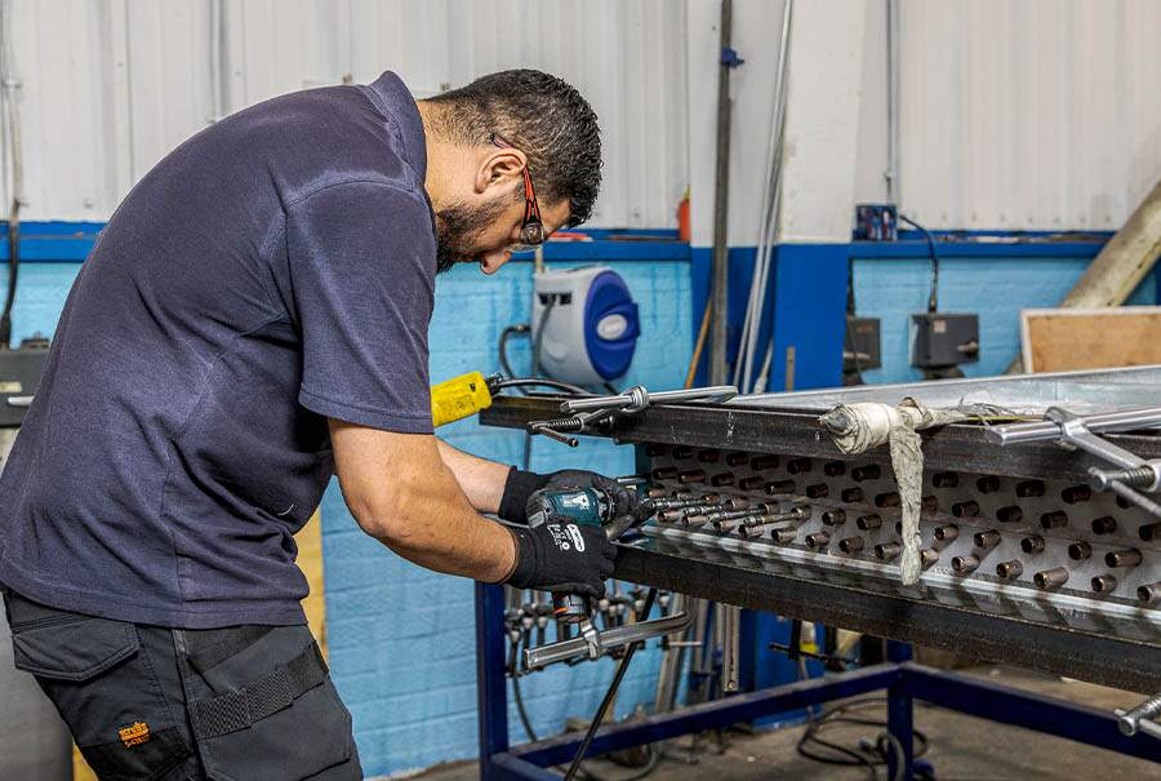
How CACW tubes are replaced
- Confirm the original construction
The replacement must match the required tube diameter, wall thickness, material and tube-end detail. The fin type and method of bonding the fins to the tube are equally important. Material changes should only be made after checking water chemistry, galvanic compatibility, mechanical properties and thermal performance.
- Remove the headers and old tube joints
Water boxes, headers and gaskets are removed to expose both tube sheets. Expanded ends may need to be internally cut behind the tube sheet and carefully collapsed. Welded, brazed, soldered or flared ends require an appropriate removal procedure that protects the tube-sheet bores and gasket faces.
- Withdraw the damaged tubes
The tube or finned-tube assembly is withdrawn using controlled mechanical or hydraulic equipment. After removal, each tube-sheet hole is cleaned and measured for scoring, ovality, corrosion or enlargement. Only minimal dressing should be undertaken; excessive reaming can make a reliable replacement joint impossible.
- Install the replacement tubes
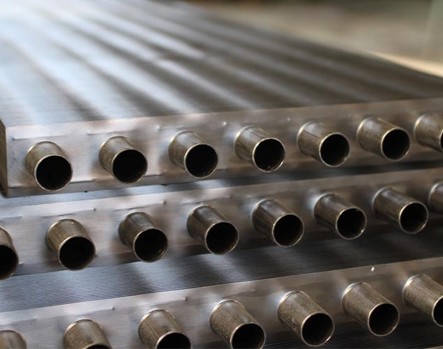
Where the cooler uses individually finned tubes, the complete finned-tube element is normally replaced. In a continuous plate-fin block, a new tube can only be installed if the design permits the correct tube-to-fin bond to be restored. A loose tube inserted through an existing fin pack will not provide the intended heat transfer and may be vulnerable to vibration.
- Form the tube-to-tube-sheet joints
The new tubes are expanded using controlled tooling and a specified wall reduction or finished internal diameter. The expansion must stop short of the rear face of the tube sheet; rolling beyond it can create a stress concentration and premature failure. Tubes are flared, seal-welded, brazed or soldered only where required by the approved design and procedure.
- Reassemble, test and document
New gaskets are fitted and the headers are reassembled using controlled bolting. The repaired water circuit is hydrostatically tested to the approved pressure, and joints are examined for leakage. Where applicable, welds are inspected by the specified non-destructive method. The cooler is then drained, dried and checked for cleanliness before returning to the electrical machine.
Final quality checks
Before the cooler is returned to service, the repair record should include:
Replacement tube material certificates and dimensional checks.
Tube-sheet inspection results and the approved tube-expansion settings.
Welding, brazing or soldering procedures and inspection results, where applicable.
Hydrostatic test pressure, duration, calibrated instrument details and acceptance result.
Verification of the double-tube leak-detection path, where fitted.
Final cleanliness, dryness, gasket condition and header-bolting checks.
Confirmation that water flow, pressure drop and cooling duty remain suitable for the machine.
Special care with double-tube CACW coolers
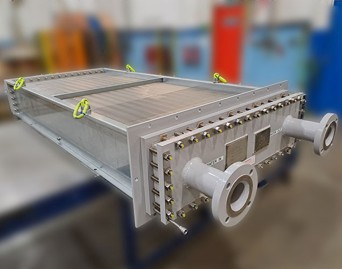
Double-tube CACW coolers are designed to provide an additional barrier between cooling water and the enclosed electrical machine. If the water-side tube fails, the interspace directs leakage to an external detection point, giving the operator warning before water can enter the air circuit.
Retubing must therefore preserve the two tube walls, the separation between them and the complete leak-detection path. Blocking or bridging the interspace defeats the safety function. Double-tube repairs should be performed to the original manufacturer’s design and verified by separate testing of the water circuit and leak-detection arrangement.
When is a replacement core the better answer?
Retubing is attractive when the main structure remains sound and the original heat-transfer surface can be reliably restored. A replacement core is usually the more dependable solution when tube failures are widespread, tube-sheet holes are enlarged or cracked, fins are corroded or detached, headers require major repair, or the tube-to-fin construction cannot be reproduced economically.
Replacement also creates an opportunity to improve tube or tube-sheet materials, provide double-tube leak protection, correct water velocity or distribution, increase thermal capacity, and retain the original installation footprint and connection locations.
Fluid Dynamics can assist
Fluid Dynamics can inspect and assess CACW and TEWAC coolers and, working with Sterling Thermal Technology, recommend the most appropriate course: plugging, targeted repair, full retubing, replacement core or a new upgraded cooler. The objective is not merely to stop a leak, but to restore safe, reliable cooling for the motor or generator.
Technical references
- Sterling Thermal Technology — CACW/TEWAC rotating-machine coolers
- Sterling Thermal Technology — Test, inspection and report of heat exchangers
- Sterling Thermal Technology — Enhanced heat exchangers with extended fins
- Kelvion — Tube repair and retubing
Fluid Dynamics, the Heat Exchange Specialists, for all your heat exchanger needs
Advice • Design • Manufacture • Refurbishment • Repair • Service