
Spiral Heat Exchangers
efficient heat transfer solutions with welded spiral heat exchangers
Fluid Dynamics’ welded spiral heat exchangers are ideal for demanding thermal duties involving fouling, viscous or solids-laden fluids and can provide another option to other heat exchangers that may be limited by fouling, pressure drop, maintenance requirements or available space.
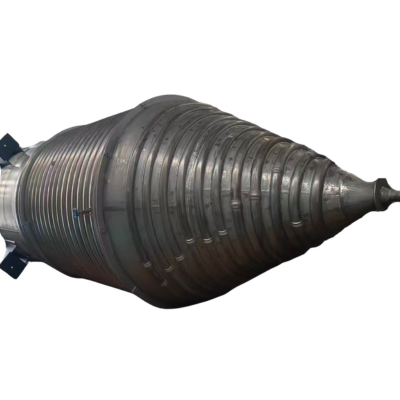
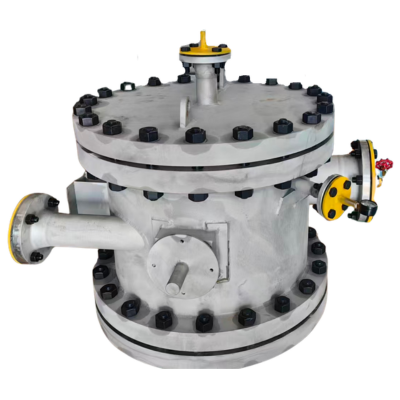
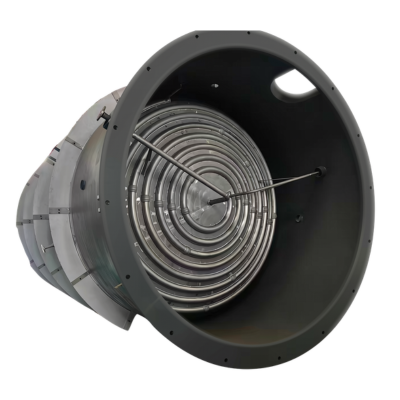
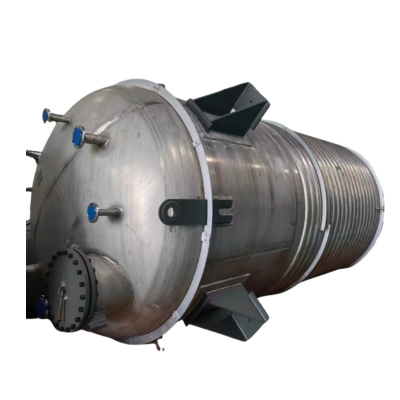
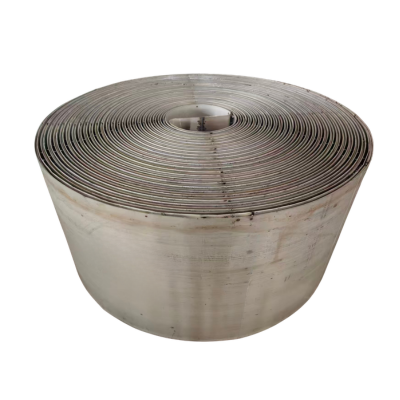
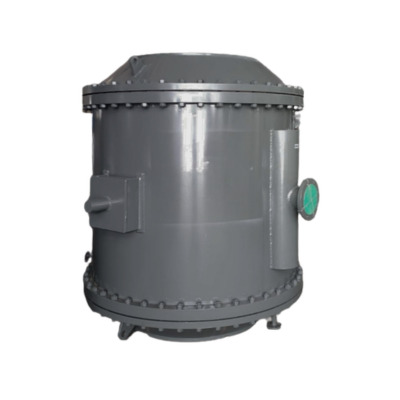
How spiral heat exchangers work
Spiral heat exchanger are constructed from metal plates wound around a central core to form two separate, continuous flow channels. Each fluid passes through a single channel, eliminating the parallel flow paths found in many conventional designs.
The continuously curving geometry promotes turbulence and wall shear. If deposits begin to form, the resulting reduction in local channel area can increase fluid velocity and produce a scrubbing effect that helps dislodge accumulated material.
Although this does not make the equipment maintenance-free, it reduces fouling rates, extends operating periods between cleaning cycles and maintains more consistent thermal performance.
For liquid-to-liquid duties, fluids are typically arranged in counter-current flow enabling efficient heat recovery and close temperature approaches. Alternative configurations can be engineered for condensing, gas-cooling, evaporation and reboiling duties.
Engineering advantages
Fluid Dynamics’ spiral heat exchangers are particularly suited to process streams containing sludge, slurry, fibres, suspended solids or viscous products.
Their principal advantages include:
- A continuous single-channel flow path that reduces the risk of blockage and flow maldistribution
- Turbulent flow and increased wall shear to resist deposit formation
- High heat transfer performance within a compact footprint
- Efficient counter-current heat recovery
- Reduced pipework and structural requirements in some installations
- Direct access to heat transfer surfaces where removable covers are specified
- Mechanical, high-pressure water or chemical cleaning options
Typical applications include:
- wastewater and sludge heating
- process-effluent cooling
- slurry heating
- product-to-product heat recovery
- digester duties
- oil and process-liquor cooling
- vapour condensation and
- waste heat recovery
Application-specific design
Spiral heat exchangers need to be engineered for each individual duty.
Important design inputs include:
- Fluid composition and flow rate
- Inlet and required outlet temperatures
- Viscosity, density and thermal properties
- Solids type, size and concentration
- Fouling, scaling or crystallisation behaviour
- Operating and design pressures
- Allowable pressure drop
- Materials compatibility
- Cleaning requirements
- Installation orientation and available space
- Applicable pressure-vessel and fabrication standards
Channel width and velocity require particular attention. The channel must be sufficiently open to pass the process fluid and suspended material while maintaining the velocity and turbulence required for effective heat transfer and fouling resistance.
Where conventional equipment is experiencing excessive fouling, frequent cleaning or unreliable thermal performance, a welded spiral heat exchanger may provide a more effective whole-of-life solution.
Expanding our heat exchanger capability
Fluid Dynamics has specialised in heat transfer since 1981 and can be trusted to select the optimal and most appropriate technology for each process – rather than being restricted to one heat exchanger type or OEM.
Fluid Dynamics’ engineers can assess new, replacement and heat recovery applications and provide thermal design, equipment selection, supply, installation support and ongoing service throughout Australia.
Contact Fluid Dynamics to discuss your process conditions and determine whether spiral technology is appropriate for the duty